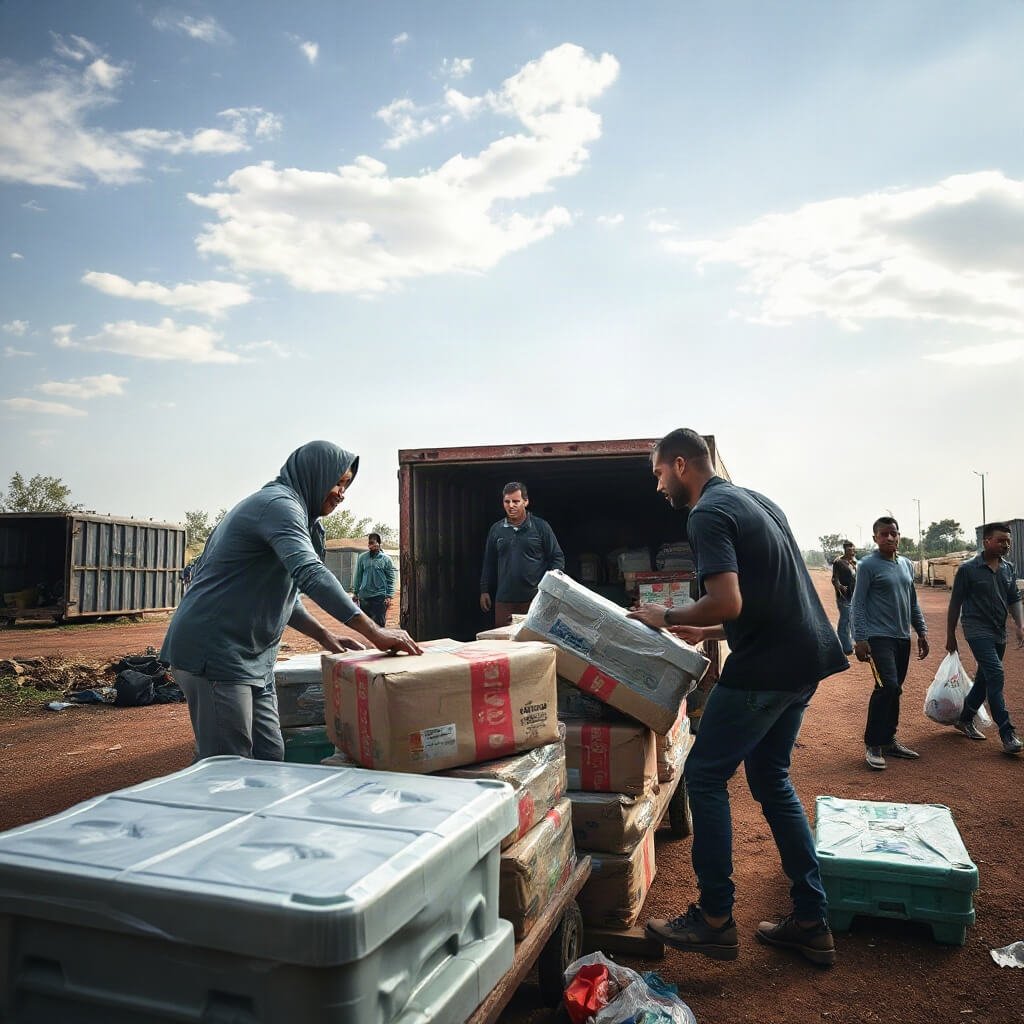
Natural disasters and humanitarian emergencies can affect communities without warning. Floods, storms, wildfires, earthquakes, landslides, and other disasters can damage homes, disrupt livelihoods, limit access to essential services, and place vulnerable individuals at greater risk.
During these difficult moments, timely assistance, compassion, and coordinated community support can make an important difference. At GHRO Canada, Disaster Relief is an important part of our humanitarian focus. We aim to support communities affected by disasters through relief and rehabilitation efforts while promoting dignity, safety, and resilience.
Understanding Disaster Impact
Disasters can have both immediate and long-term consequences. Families may lose their homes, belongings, sources of income, or access to food, clean water, healthcare, education, and other essential services.
The effects can be especially difficult for children, older adults, persons with disabilities, people experiencing poverty, and other vulnerable members of a community.
Emergency assistance is therefore not only about responding to the immediate crisis. Communities may also need continued support as they begin rebuilding their homes, livelihoods, infrastructure, and social connections.
GHRO Canada’s Disaster Relief Focus
GHRO Canada focuses on delivering relief and rehabilitation support during disasters and emergencies. Our broader humanitarian approach seeks to support communities facing difficult circumstances and help strengthen their ability to recover.
Our disaster relief focus may include:
- Emergency humanitarian assistance
- Support for communities affected by natural disasters
- Assistance for vulnerable individuals and families
- Relief and rehabilitation support
- Community recovery initiatives
- Support for basic needs during emergencies
- Awareness and preparedness efforts
- Promoting community resilience
Our goal is to contribute to humanitarian responses that place people and their dignity at the center.
Emergency Assistance When It Matters Most
In the immediate aftermath of a disaster, affected communities may have urgent needs. Food, safe shelter, essential supplies, medical support, clean water, and protection can become critical priorities.
Effective emergency response requires understanding the needs of affected communities and ensuring that assistance reaches people who need it most.
GHRO Canada recognizes the importance of timely and responsible humanitarian assistance during emergencies. Our focus is on supporting relief efforts that respond to real community needs while respecting the dignity and circumstances of affected individuals.
Supporting Vulnerable Communities
Disasters do not affect everyone equally. People who were already experiencing poverty, displacement, homelessness, disability, or other challenges may face additional difficulties during an emergency.
Children can lose access to education. Families may become separated. Persons with disabilities may face additional barriers when evacuating or accessing essential services. People without stable housing can become particularly vulnerable.
For this reason, humanitarian response should consider the different needs of different groups.
GHRO Canada aims to promote an inclusive approach to disaster relief where vulnerable individuals and communities are not overlooked during emergency response and recovery efforts.
From Relief to Rehabilitation
Disaster relief is only the beginning of recovery.
Once immediate needs have been addressed, affected communities may require longer-term rehabilitation. Homes may need to be repaired, livelihoods restored, schools reopened, and community services rebuilt.
Recovery can take time, and the needs of each community can be different.
GHRO Canada recognizes the importance of connecting emergency relief with rehabilitation and recovery. By supporting longer-term recovery efforts, humanitarian action can help communities move from crisis toward greater stability and resilience.
Supporting Families After a Disaster
For families affected by disasters, recovery can be emotionally and financially challenging. Losing a home, personal belongings, or a source of income can create uncertainty about the future.
Humanitarian support should therefore consider the dignity and well-being of families throughout the recovery process.
Where appropriate, community-based support can help affected families identify their priorities, access available resources, and begin rebuilding their lives.
GHRO Canada believes that people affected by disasters should be treated with compassion and respect throughout every stage of humanitarian response.
Community Resilience and Preparedness
Building stronger communities also means preparing for future emergencies.
Disaster preparedness can help individuals and communities understand potential risks, develop emergency plans, identify vulnerable groups, and respond more effectively when disasters occur.
Community awareness can play an important role in reducing risks and strengthening resilience. Prepared communities are often better positioned to respond to emergencies and begin recovery.
GHRO Canada supports the importance of awareness, preparedness, and community resilience as part of broader efforts to reduce the impact of disasters.
Working Together During Emergencies
Disaster response often requires cooperation among communities, humanitarian organizations, government agencies, volunteers, professionals, and other stakeholders.
No single organization can address every challenge created by a major disaster. Effective humanitarian action depends on communication, coordination, responsible resource management, and an understanding of local needs.
GHRO Canada believes that collaboration and community participation can strengthen humanitarian responses and help ensure that support is focused where it is most needed.
Protecting Dignity During Crisis
People affected by disasters can experience uncertainty, loss, fear, and displacement. Humanitarian assistance should therefore go beyond providing physical resources.
Respecting people’s dignity, privacy, safety, and individual circumstances is an essential part of responsible humanitarian action.
GHRO Canada promotes a people-centered approach to disaster relief that recognizes affected individuals not simply as recipients of assistance, but as people with rights, experiences, abilities, and aspirations.
Building a Stronger Future
Recovery provides an opportunity to build communities that are better prepared for future challenges.
Rehabilitation can include restoring essential services, strengthening community networks, supporting livelihoods, improving preparedness, and addressing vulnerabilities that may increase the impact of future disasters.
GHRO Canada seeks to support humanitarian efforts that contribute to both immediate relief and longer-term community resilience.
Our broader focus on climate-affected communities also recognizes the importance of supporting people facing environmental challenges and changing risks.
Our Commitment
GHRO Canada is committed to supporting communities affected by disasters through humanitarian relief and rehabilitation efforts.
We believe that people facing emergencies deserve timely, compassionate, and dignified support. Whether a community is responding to an immediate crisis or working through the long process of recovery, humanitarian action can help provide hope and create pathways toward greater stability.
Our commitment is to stand with vulnerable communities during difficult times and support efforts that help people recover, rebuild, and move forward.
Together, We Can Rebuild
Disasters can change lives in an instant, but communities can also demonstrate extraordinary strength, courage, and resilience in the face of adversity.
By supporting emergency relief, rehabilitation, preparedness, and community resilience, we can help affected communities move toward recovery and a more secure future.
Together, we can support communities in times of crisis, help families rebuild with dignity, and work toward a stronger and more resilient future for everyone.